What is website development?
Website development is how a design becomes a living, working website - the code, the servers and the engineering behind everything you click. Here’s a clear, jargon-free guide to what it means, how it works, and what it costs in 2026.
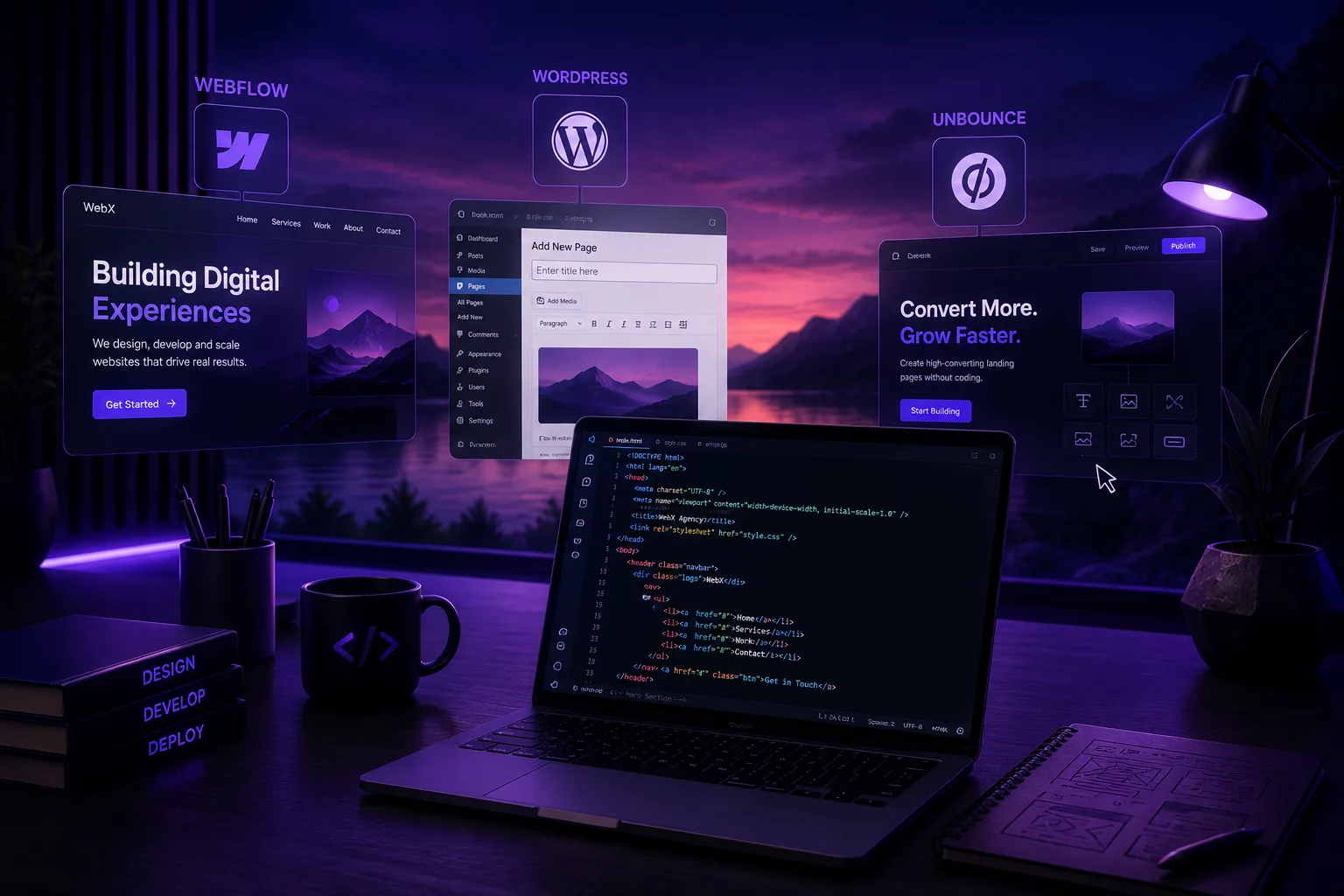
Website development is the process of building, coding and maintaining a website - taking a visual design and turning it into a functioning site that people can actually use. If web design is the architect’s blueprint, web development is the construction crew that turns those drawings into a building you can walk into.
At Web{X}, an international studio, we build websites for founders and businesses in India, the UK, the US and the Gulf. This guide explains, in plain English, exactly what website development involves - so you know what you’re buying and can ask sharper questions of anyone you hire.
Website development is the engineering that turns a design into a working, fast, secure website - covering the front-end (what visitors see) and the back-end (the servers, databases and logic behind the scenes).
The three layers of website development
Almost every website is built across three layers. Understanding them makes the whole industry click into place.
1. Front-end development (the client side)
The front-end is everything a visitor sees and touches - layout, buttons, menus, animations, forms. It’s built with three core technologies: HTML (structure), CSS (styling) and JavaScript (interactivity), often using frameworks like React or Next.js. Good front-end development is what makes a site feel fast, smooth and effortless on any device.
2. Back-end development (the server side)
The back-end is the engine room you never see - the servers, databases and application logic that store data, process logins, handle payments and serve the right content. It’s built with languages such as Node.js, PHP or Python, connected to databases like PostgreSQL or MongoDB. A brochure site may need almost no back-end; an ecommerce store or web app needs a lot.
3. Full-stack development (both together)
A full-stack developer works across both layers, from the interface down to the database. Most real projects need this range of skill - which is why studios exist: to bring design, front-end and back-end together into one coherent, well-engineered product.
Website development vs web design - what’s the difference?
People use the terms interchangeably, but they’re different jobs:
| Web Design | Web Development | |
|---|---|---|
| Focus | How it looks & feels | How it works |
| Tools | Figma, brand systems, UX | Code, frameworks, databases |
| Output | A blueprint / prototype | A working website |
| Question it answers | “What should this be?” | “How do we build it?” |
The best results come when the two work together from day one. That’s the whole idea behind Figma-to-Webflow and similar workflows - a clean handoff from design into development with nothing lost in translation.
Need a website actually built - not just designed?
We handle the full stack: design, front-end and back-end, engineered for speed and SEO. Tell us your goal and we’ll send a clear, itemised quote within two business days.
Start your projectHow a website gets built: the process
Development rarely means “sit down and code.” A professional build follows a sequence: discovery and planning, design, front-end and back-end development, content, testing, launch and ongoing maintenance. We break this down step by step in our website development process guide.
The tools: custom code vs no-code
In 2026 there are two broad ways to develop a website:
- Custom code - hand-built with HTML, CSS, JavaScript and back-end languages. Maximum flexibility and performance; best for complex apps and bespoke needs.
- No-code / visual platforms - tools like Webflow, Framer and WordPress let you build powerful sites visually, with clean output and far less hand-coding. Ideal for marketing sites, blogs and most business websites.
Neither is “better” - the right choice depends on the project. We compare them in custom website development vs website builders.
Why good development matters for SEO
Development quietly decides whether you ever rank. A site with clean semantic code, fast load times and stable layout passes Core Web Vitals - Google’s performance signals - while a bloated, slow build sinks. Structured data, accessibility and mobile-first engineering are all development decisions with a direct SEO payoff.
Design gets people to admire your site. Development gets it to load, work and rank - which is what actually wins customers.
What does website development cost?
In 2026, a professional business website typically costs ₹40,000-₹2,00,000 (about $500-$2,500), while ecommerce stores and custom web apps run ₹3,00,000+. The number depends on design complexity, features, integrations and performance work - not on the word “development” itself. For the full breakdown, see our website cost guide.
The takeaway
Website development is the engineering craft that turns an idea and a design into a fast, secure, working website. Whether it’s hand-coded or built on a modern no-code platform, good development is what makes a site load quickly, work flawlessly and rank on Google. Get the development right, and everything else - marketing, sales, SEO - has a solid foundation to stand on.